
Photographing the Golden Gate from the Marin Headlands
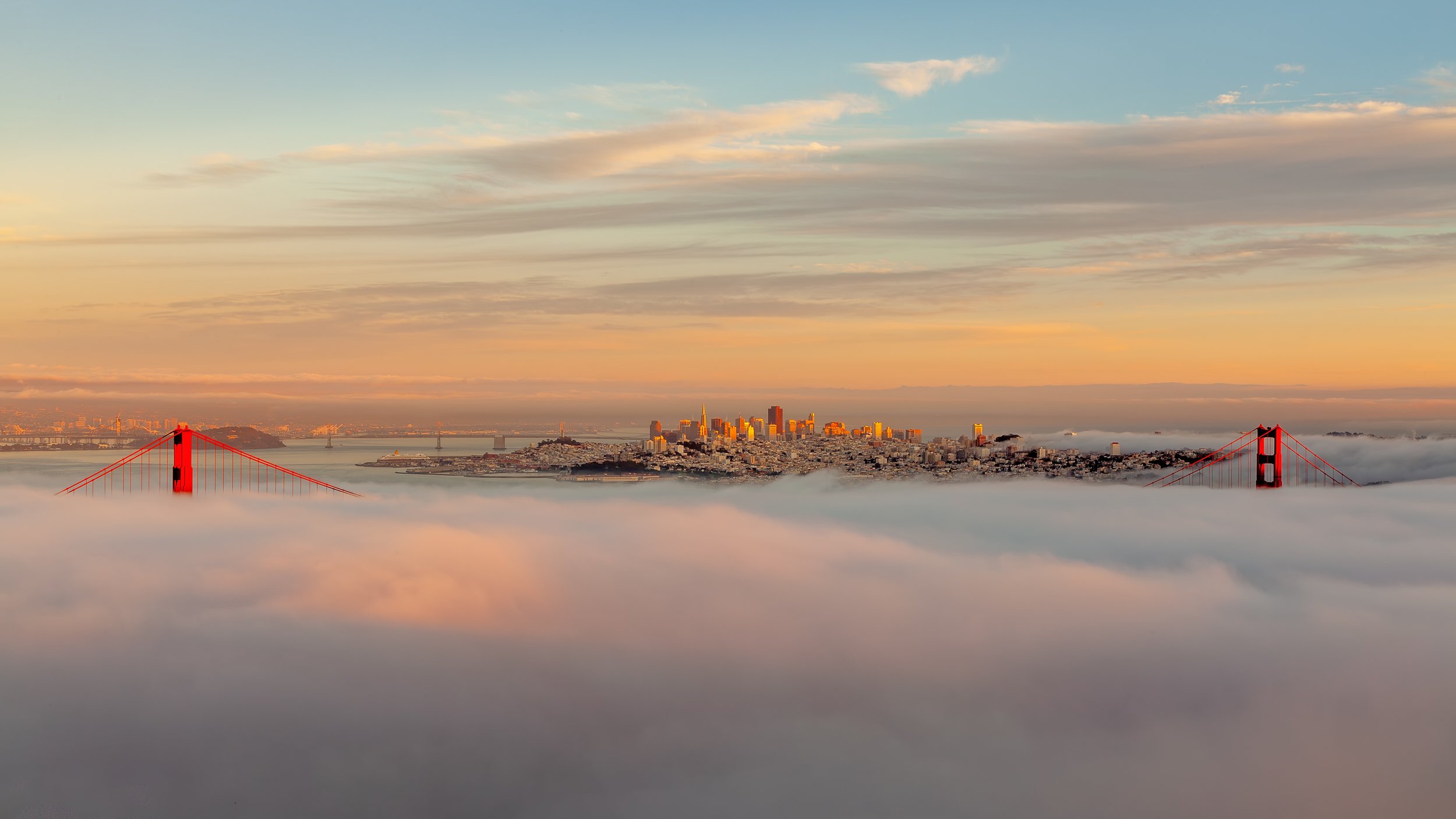
The Marin Headlands are part of the Golden Gate National Recreation Area and provide elevated views of the Golden Gate Bridge, San Francisco Bay, and the city skyline. Coastal fog is a defining part of the region's weather and visual identity.
Taken from Hawk Hill, Marin Headlands.
Opened in 1937, the Golden Gate Bridge remains one of the defining landmarks of San Francisco and the Bay Area. Often described as one of the most photographed bridges in the world, it is easy to understand why. The bridge takes its name from the Golden Gate Strait, which it crosses to connect San Francisco to Marin across a span of roughly 1.7 miles. Its towers rise 746 feet above the water, and when it opened after four years of construction, it was the longest and tallest suspension bridge in the world.
Those facts matter to me as a photographer. The bridge is beautiful, but its appeal is not only visual. Its history, Art Deco design, International Orange color, engineering scale, and location all contribute to why I am drawn to photograph it. The Golden Gate Bridge is both an architectural subject and a Bay Area landmark, but it is also part of a larger coastal landscape shaped by water, hills, fog, wind, and changing light.
That combination is what makes the area so compelling. The San Francisco Bay can produce remarkable atmospheric conditions. Fog can move through the strait and wrap around the towers. Evening color can settle over the water. Wispy clouds, marine layers, city lights, and shifting weather can change the scene from one visit to the next. The bridge may be familiar, but the conditions around it are rarely the same twice.
A photographer could spend years working in San Francisco and the surrounding Bay Area and still find new subjects, new weather, and new ways to see familiar places. Whether someone is drawn to cityscape, landscape, architecture, travel, or street photography, the Golden Gate Bridge is likely to become part of their work at some point. It is one of those subjects that continues to call photographers back, not because it is easy to photograph, but because it offers so many different possibilities.
There are many places around the Bay to view and photograph the Golden Gate Bridge, and each location provides its own relationship to the scene. For me, the Marin Headlands remain one of the most compelling. From the north side of the bridge, the view can include San Francisco, the Bay, the Pacific coast, the bridge towers, the roadway, the surrounding hills, and the changing weather moving through the strait.
The Marin Headlands have several popular locations for viewing and photographing the bridge. Vista Point, Fort Baker, Battery Spencer, Kirby Cove, and Hawk Hill each offer different perspectives. Some views place the bridge close and dominant. Others allow the bridge to sit within the wider landscape of the Bay, the city, and the coastline.
Hawk Hill is one of the places I return to most often. It offers a high, open view of the Golden Gate Bridge and San Francisco beyond it. Some of my favorite images, both my own and from other photographers, have come from this area. The location gives enough distance to see the bridge as part of a broader setting, while still keeping its structure, towers, and relationship to the city visually clear.
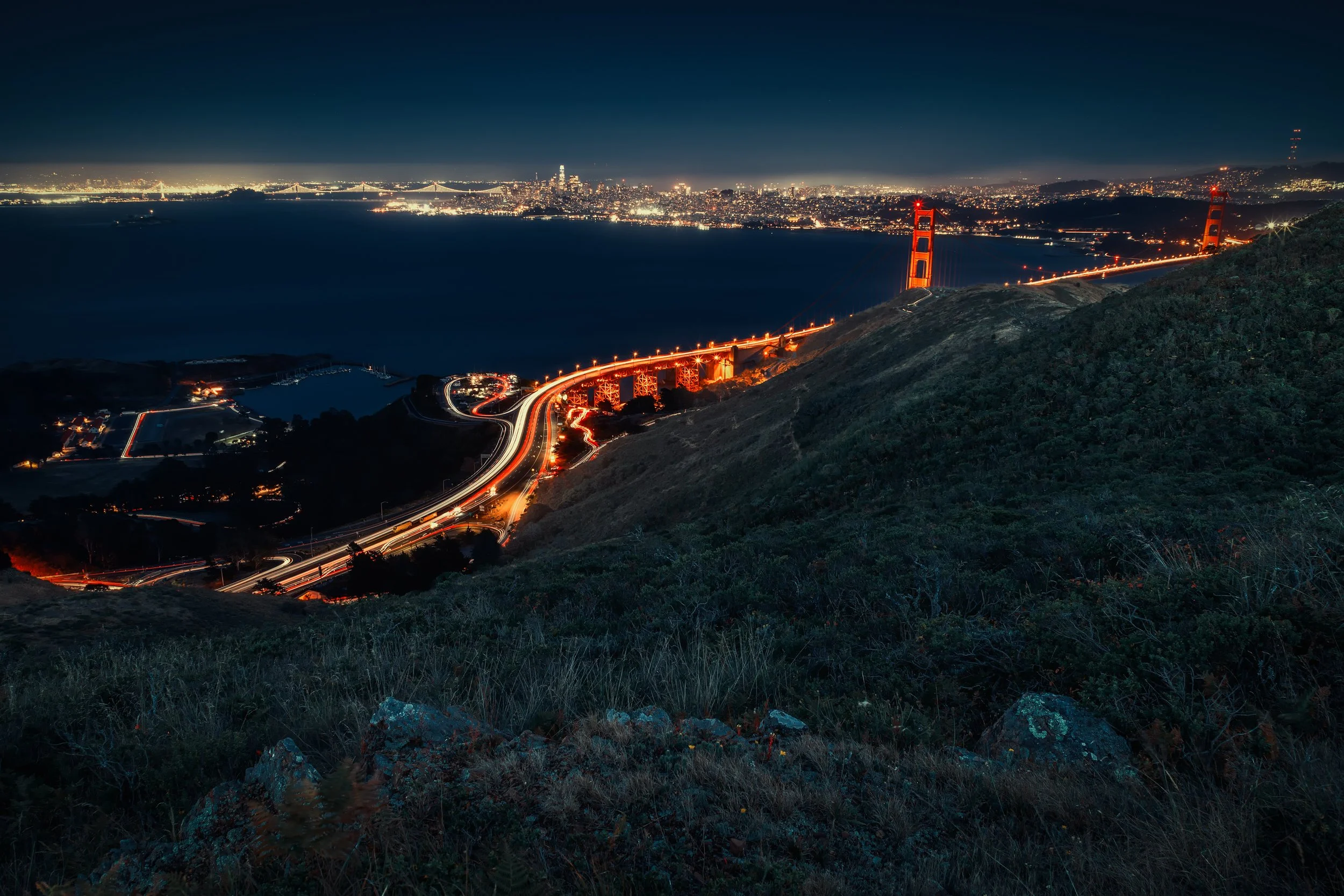
Night view of the Golden Gate Bridge and San Francisco from the Trail to Slacker Hill.
For those willing to hike farther, locations such as Slacker Hill provide an even wider view of the Golden Gate Bridge, San Francisco, and the greater Bay Area. From these higher vantage points, the bridge becomes part of a larger landscape rather than the only subject. That broader view is part of what keeps the Marin Headlands so interesting to photograph.
The area also has a personal side for me beyond the photographs. The Marin Headlands are a place to hike, spend time with family, and return to familiar views in different conditions. I often take my dog to Rodeo Beach before or after visiting the Headlands for photography, and many of the trails through the area offer new opportunities to see the bridge, the coastline, and the city from a different perspective.
The challenge with photographing a place as familiar as the Golden Gate Bridge is not simply finding a viewpoint. The challenge is finding a moment that feels worth keeping. For me, that often comes from the intersection of history, architecture, atmosphere, and place. The bridge has a strong identity on its own, but the Headlands allow it to be photographed in context: as part of San Francisco, part of Marin, part of the Bay, and part of the changing coastal environment.
That is what continues to bring me back to the Marin Headlands. The location offers more than a postcard view. It offers a way to study one of the Bay Area’s most recognizable landmarks through light, weather, structure, distance, and time.